
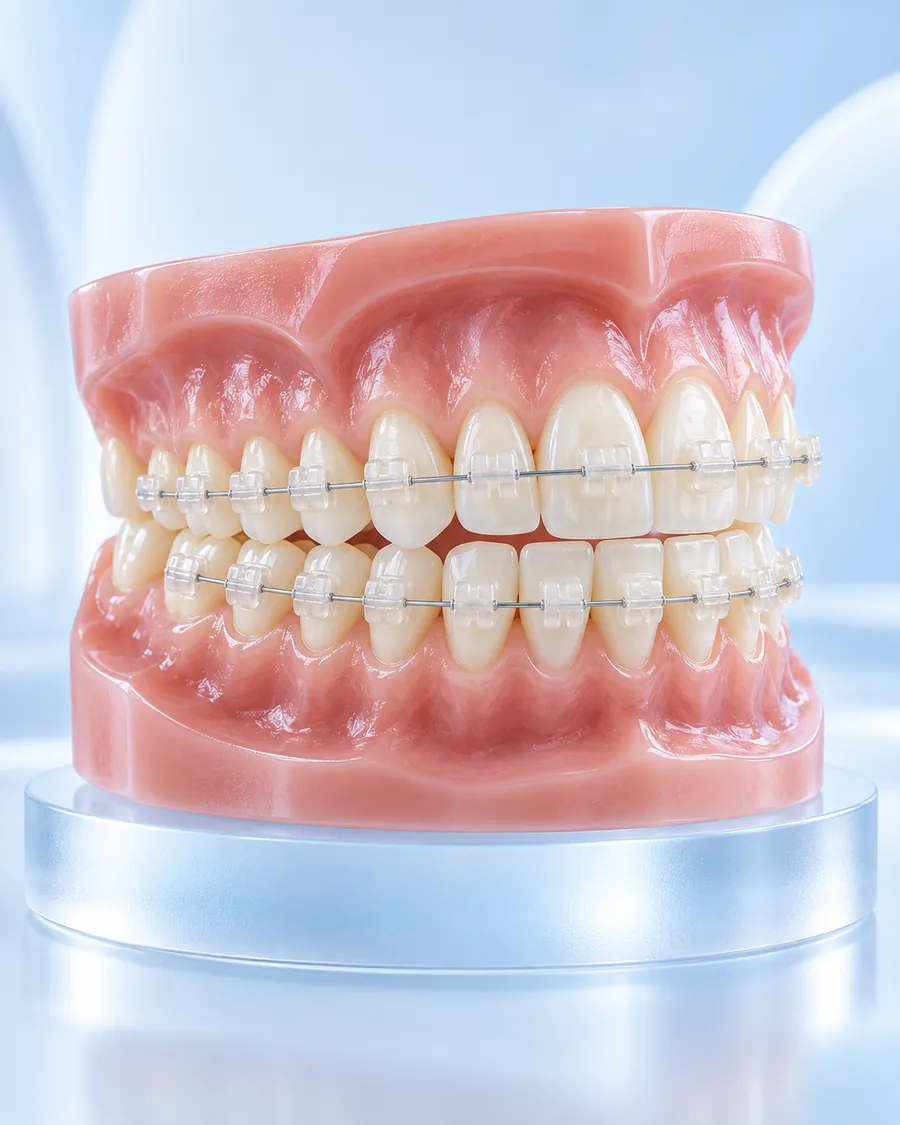
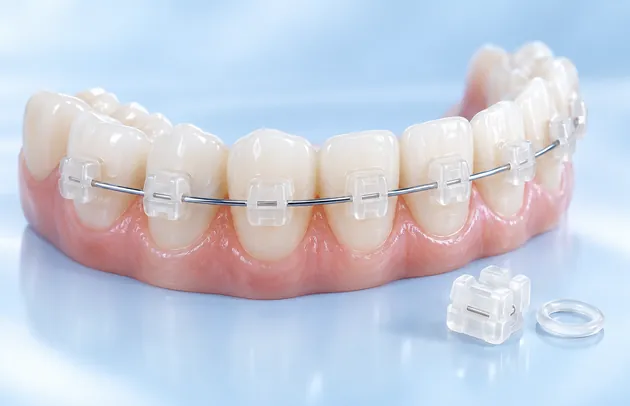
Assured Dental Care is a dental clinic in Andheri West, Mumbai, where ceramic braces are used for people who want fixed braces that are less noticeable. They work in the same way as metal braces, with brackets bonded to the teeth and joined by a wire, but the brackets are made of tooth-coloured or clear ceramic, so they blend in with the teeth. They keep working all the time and can treat many bite problems, though the brackets are more fragile than steel.
Your care is led by Dr. Shreya Shah, Chief Dentist, who examines your teeth, gums and bite first and explains whether ceramic braces suit you and where on the teeth they should go. If you are looking for a dentist in Andheri West for less visible braces, the first step is an examination and X-rays, followed by a clear explanation of the trade-offs, the cleaning and the retainers.
Medically reviewed by Dr. Shreya Shah, Chief Dentist. Last reviewed 9 October 2026. Registered with the Maharashtra State Dental Council (registration A 30472, 2015). Dr. Shah is also the treating dentist at this clinic.
Ceramic braces at Assured Dental Care in Andheri West, Mumbai are fixed braces with tooth-coloured or clear brackets that are less noticeable than metal ones. Dr. Shreya Shah examines your teeth and bite first and explains the trade-offs. The brackets are more fragile, and retainers are worn after treatment.
Examination and X-rays start at your first visit, subject to availability.
Tooth-coloured ceramic blends in with the teeth better than steel brackets.
The brackets are more fragile than metal, and we explain what that means for your teeth.
Ceramic braces are fixed braces. A small bracket is bonded to the front of each tooth, and a wire runs through the brackets and moves the teeth as it is adjusted. The difference is the bracket, which is made of ceramic that is clear or matches the colour of the teeth, instead of steel. The wire is often tooth-coloured or fine metal.1
Ceramic is hard but brittle, so a ceramic bracket can chip or break more easily than a steel one, and it can wear the teeth that bite against it. The elastic ties that hold the wire can stain. For these reasons, ceramic brackets are sometimes used only on the visible front teeth or on the upper teeth, with metal on others.2
If strength matters most, metal braces are the usual choice. If you prefer removable trays, see Invisalign and clear aligners, and our braces treatment page compares all the types. Brackets that use clips instead of ties are described on the self-ligating braces page.
Ceramic braces work like metal braces but use brackets that blend in, and they are more fragile.
Dr. Shreya Shah decides this only after an examination and X-rays. These are the general patterns.
If you grind your teeth, metal braces may be a stronger choice. If decay is present, a filling is done first. If you want the least visible option, Dr. Shah explains aligners as well.
Ceramic braces suit many people who want less visible braces, and an examination shows whether they suit your bite.
The right choice depends on your teeth, your bite and how visible you want your braces to be. Dr. Shah explains the options.
Tooth-coloured or clear brackets that blend in. They suit people who want fixed braces that are less noticeable, but the brackets are more fragile.
Fixed, less visibleSteel brackets that are the strongest and most widely used. They suit most bites and have colours to choose, but they are more visible.
FixedRemovable clear trays, almost invisible, for simpler cases and for people who can wear them for most of the day.
Removable| Compare | Ceramic braces | Metal braces | Clear aligners |
|---|---|---|---|
| How visible | Less | Most | Hardly |
| Strength of brackets | Lower, can chip | Highest | Not applicable |
| Ties can stain | Yes | Yes, light colours | Not applicable |
| Complex bites | Most | Most | Some |
| Depends on wear by you | No | No | Yes |
Ceramic braces trade some strength for a less visible look, and we explain the others so that you can compare.
Treatment has a planning stage, an active stage and a retainer stage. Your plan may have more or fewer steps.1
Ceramic braces need the same steps as metal braces, with extra care for the brackets.
Dr. Shah examines your teeth, gums, bite and jaw joints and takes X-rays. Decay and gum disease are treated first.
Photographs, impressions or a scan are taken. Dr. Shah explains the problem, the plan, which teeth get ceramic brackets, the likely time and what is asked of you.
If the teeth are crowded, space may be made by removing a tooth or polishing small amounts of enamel between teeth. This is discussed first.
The teeth are cleaned and dried and a ceramic bracket is bonded to each chosen tooth with adhesive set by a light. Steel brackets may be used on some teeth.
The first wire is threaded through the brackets and held with clear or tooth-coloured ties or clips.
You are shown how to brush around brackets and under the wire. Good cleaning is needed to keep ceramic brackets clear and to protect the teeth.
Every few weeks the wire is adjusted and the ties are replaced. Progress is checked, and a bracket that has chipped or come off is repaired.
When the teeth reach the planned position, the brackets are carefully removed, the teeth are cleaned and retainers are fitted.
Cost depends on your evaluation. Ceramic braces are planned for each person, so no single figure applies to everyone.
Two people who want less visible braces can need very different plans. After the examination and X-rays, Dr. Shreya Shah sets out the stages, and the cost of each one is explained before you choose to go ahead.
Call 08806796696 or message us on WhatsApp. Go to a hospital emergency department if you struggle to breathe or swallow, or if swelling spreads to your eye or neck. For a bracket or wire problem that hurts, call us, and see dental emergency treatment for other urgent problems.
Careful eating and daily cleaning protect the brackets and your teeth.
Ceramic braces can suit well, and we say plainly when a stronger or different option is wiser.
The first visit is for questions and a plan. No braces are fitted that day.
Take along earlier X-rays or orthodontic records and a list of your medicines. Mention decay, gum trouble, jaw joint pain, grinding and allergies. Think about how you will manage cleaning and what you eat.
Call 08806796696 to book.

Examination before bracesTrade-offs explainedReferral when needed
Dr. Shah describes what she finds in everyday words and explains each choice, and you decide in your own time. If dental treatment makes you anxious, tell us at the start so that we can go at a pace that suits you. We would rather you ask every question before treatment than leave with doubts, so please bring a list.
Teeth, gums, bite and X-rays are reviewed, and decay and gum disease are dealt with before any tooth moves.
The appeal of tooth-coloured brackets is weighed against their fragility, and the choices are laid out side by side.
You learn how to keep teeth and brackets clean and why retainers are part of treatment.
If a case needs training beyond what the clinic has, Dr. Shah says so and passes it to a suitably trained orthodontist.
These are patient reviews of the clinic and Dr. Shah, copied word for word from the clinic’s Google Business Profile. They describe the experience of visiting the clinic and are not evidence of how any treatment will turn out for you.
“Most relaxing dental clinic I have ever been to,and I have been to a few.what I liked the most of Dr Shreya gave me 3treament options and I was explained pros and cons of everything.”
“Lovely experience. Made my dental appointment so comfortable I forgot it was my first time .”
“Hi....it was a very good experience Doctor and staff is very professional and very attentive Thankful for easy process and excellent care”
“Outstanding service from start to finish. The staff is warm and courteous, and Dr Shreya is honest, skilled, and efficient.”
“Me and my family have been visiting Dr Shreya for a few years now. She makes us feel very comfortable and at ease. She is always accommodating us on urgent basis when required. Would recommend her.”
Assured Dental Care is a dental clinic in Andheri West, Mumbai, next to Lallubhai Park in Parsi Colony. You can book a ceramic braces evaluation with Dr. Shreya Shah by phone or WhatsApp. The map shows the exact location of the clinic. If your problem is urgent, please call before you travel so that we can arrange the earliest visit available. Please bring any earlier reports.
Straight answers to what patients ask before they book. If your question is not here, call or message us.
Ceramic braces are planned for each person, so the cost is given only after your evaluation. It depends on how much the teeth must move, how long treatment is expected to take, which teeth get ceramic brackets, whether teeth must be removed or space made, the number of visits, the X-rays and records and the retainers afterwards. After the examination, Dr. Shreya Shah explains the plan and the cost of each stage before you decide.
Ceramic braces work like metal braces, but the brackets are made of a tooth-coloured or clear ceramic material, so they blend in with the teeth. A wire runs through the brackets and is adjusted at regular visits. The wire may be tooth-coloured or metal.
They are much less noticeable than metal braces, especially at a distance, but they are not invisible. The brackets are slightly larger, and you can still see the wire and the bands. Aligners are less visible but depend on being worn.
The ceramic brackets themselves resist staining, but the elastic ties that hold the wire can stain with tea, coffee, curry and tobacco. The ties are changed at each visit. Good cleaning keeps the brackets looking clear and prevents marks on the teeth.
Ceramic is harder but more brittle, so ceramic brackets can chip or break more easily than steel ones, and they can wear the enamel of teeth that bite on them. For these reasons, they are sometimes used only on the front teeth or on the upper teeth. Dr. Shah explains the plan for your mouth.
Not necessarily. Treatment time depends on how far the teeth must move and how well the plan is followed. Ceramic brackets can need more care when they are removed, and a bracket that breaks can add a visit. We give an estimate after the examination.
Often yes, because the brackets contain no metal, although the wire may. Tell us about any allergy before treatment so that Dr. Shah can choose parts that suit you.
Brush after meals and at least twice a day, taking time around each bracket, and clean under the wire with interdental brushes or floss threaders. Cut down on staining food and drink. Good cleaning is needed for every type of braces, and it protects the teeth when the braces are removed.
If you would like braces that are less noticeable, an examination and X-rays show whether ceramic braces suit your teeth. If another clinic has given you a braces plan, we are glad to give a second opinion. Call or message us in clinic hours and we will confirm a time.
Monday to Saturday, 10:00 AM to 7:30 PM.
Read this for the strongest and most widely used type of fixed braces.
Read this for all the braces types and aligners compared.
Read this if you prefer removable clear trays.
See all dental treatments at Assured Dental Care, or read about our general dentist in Andheri West.
Written and reviewed by: Dr. Shreya Shah, Chief Dentist, Maharashtra State Dental Council registration A 30472. Last reviewed 9 October 2026. Dr. Shah is also the clinic’s treating dentist, and this page describes treatment that Assured Dental Care provides.
On the review date, Dr. Shah read the whole page and checked each clinical statement, timeline and warning sign against the sources listed below. The page is next reviewed within six months, and sooner if a source or the clinic’s process changes. To report an error, call or message the clinic using the details above.
This page is general information for patients. It is not a diagnosis or a substitute for an examination by a dentist. Treatment, timelines and outcomes vary from person to person.
