
Assured Dental Care is a dental clinic in Andheri West, Mumbai, where dental implants are planned around the tooth you are missing, the gums and bone that will hold it, and the crown, bridge or denture that it will carry. A dental implant is a small titanium post placed in the jawbone to act as the root of a replacement tooth. It is chosen when a natural tooth cannot be kept or is already gone.
Your care is led by Dr. Shreya Shah, Chief Dentist, who first checks whether a damaged tooth can still be saved before an implant is discussed. If you are looking for an implant dentist in Andheri West, the first step is an examination, X-rays and a clear explanation of your options, the stages involved, the healing time and the risks.

Medically reviewed by Dr. Shreya Shah, Chief Dentist. Last reviewed 9 October 2026. Registered with the Maharashtra State Dental Council (registration A 30472, 2015). Dr. Shah is also the treating dentist at this clinic.
Dental implants at Assured Dental Care in Andheri West, Mumbai replace the root of a missing tooth with a titanium post, then add a crown, bridge or denture. Dr. Shreya Shah plans each case after an examination and X-rays. Healing usually takes three months or more before the final tooth is fitted.
Examination, X-rays and planning start at your first visit, subject to availability.
An implant stands on its own in the bone, so healthy teeth beside the gap are not shaped.
The position of the implant follows the crown, bridge or denture it will carry.
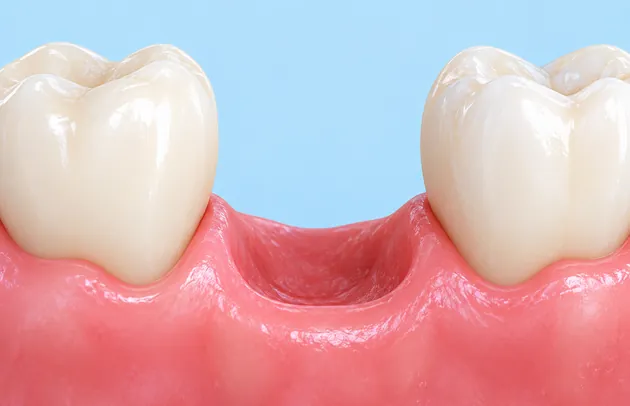
A dental implant is a screw-shaped post, usually made of titanium, placed in the jawbone to replace the root of a missing tooth. Over the healing period the bone grows against the surface of the post, a process called osseointegration. The post then holds a dental crown, a bridge or a denture.
The main alternatives are a fixed bridge and a removable denture. A dental bridge is anchored to the teeth on either side of the gap, so those healthy teeth have to be shaped. A denture rests on the gum and can move while you eat or speak. A tooth implant stands on its own in the bone, so the neighbouring teeth are left untouched.3
Teeth are usually lost to deep decay, a fracture, an infection at the root, advanced gum disease or an injury. Once a tooth is gone, the bone under the gap slowly shrinks, which is why a long wait can make an implant harder to place.
An implant replaces the root as well as the visible tooth, and it does not depend on the teeth beside it.
Dr. Shreya Shah decides suitability only after an examination, a medical history and X-rays. These are the general patterns.
Not every missing tooth needs an implant. A bridge, a denture, orthodontic space closing or leaving the gap may suit some people better. Where decay or infection is the reason a tooth is failing, Dr. Shah first checks whether root canal treatment can keep it, and whether gum treatment is needed before any surgery.
Suitability depends on your gums, bone, health and habits, and it is confirmed only after an examination.
The right option depends on how many teeth are missing and where. The number of implants and the final restoration are decided at your evaluation.
One implant carries one implant crown when a single adult tooth is missing. The neighbouring teeth do not need to be shaped. See single tooth implant.
Healing: about 3 months or moreTwo or more implants can hold a fixed bridge across several missing teeth. The number and position of implants depend on the gap, the bone and the bite. See multiple teeth implants.
Planned per gapA denture that clips onto implants stays steadier than one that rests on the gum alone. It can be taken out for cleaning. Full-arch plans such as All-on-4 or full mouth dental implants are assessed separately.
Planned per jaw| Compare | Dental implant | Fixed bridge | Denture |
|---|---|---|---|
| Surgery needed | Yes, under local anaesthesia | No | No |
| Neighbouring teeth shaped | No | Yes | Sometimes, for clasps |
| Fixed in the mouth | Yes | Yes | No, removable |
| Typical timeline | About 3 to 9 months | A few weeks | A few weeks |
| Supports the jawbone | Yes, the post sits in the bone | No | No |
Implants, bridges and dentures each suit different situations, and we explain all three before you choose.
Most patients have a planning visit first, then surgery, a healing period and a fitting visit. Your own plan may have more or fewer steps.
Surgery is one step of several, and the planning before it decides the result.
Dr. Shreya Shah reviews the missing tooth, your dental history, medical conditions, medicines, allergies, tobacco use and what you expect from treatment. She examines the teeth, gums, bite and the gap.
Digital X-rays show the neighbouring teeth and the bone. If they do not show enough, a 3D scan such as a CBCT may be advised to check the bone, nerves and sinus, and you are told why it is needed.
Active decay, gum inflammation and infection are treated before any implant surgery, and gum problems may need periodontal treatment first. A tooth that cannot be saved is removed, while a tooth that can be saved is kept.
The position of the implant is planned from the crown, bridge or denture it must carry, not from the amount of bone alone. You hear the alternatives, the stages, the risks and the healing time before you consent.
A damaged tooth may be taken out by tooth extraction before the implant, or at the same visit in some cases. If the bone is too thin, a bone graft builds it up, either first or during placement.4
The area is numbed and you stay awake. A channel is prepared in the bone, the implant is placed and the gum is closed with stitches or fitted with a healing cap.
The gum heals over days to weeks while the bone bonds to the implant. Many implants need at least three months before they carry the final tooth. The timeline varies by site and by procedure.
If the implant was covered by gum, a small procedure uncovers it and a healing abutment shapes the gum. An impression or digital scan then records the position, and the laboratory makes your implant crown, bridge or denture, in a way similar to a dental crown on a natural tooth. It is checked for fit, bite and cleaning access before it is attached.
Cost depends on your evaluation. Implant treatment is planned for each person, so no single figure fits everyone.
Two patients who each need one implant can have very different plans. After the examination and X-rays, Dr. Shreya Shah explains the stages, and the cost of each stage is discussed before you decide to go ahead.
Call 08806796696 or message us on WhatsApp. If you have trouble breathing or swallowing, or swelling is spreading to your eye or neck, go to a hospital emergency department. Our page on dental emergency treatment explains what to expect if you need to be seen urgently.
Most problems are easier to fix when we hear about them early.
An honest plan includes the reasons not to place an implant as well as the reasons to place one.
Your first visit is an evaluation, not surgery. You can come with questions about the gap, your medical history and your timeline.
Bring any earlier X-rays or reports, and a list of the medicines you take. Tell us about allergies, diabetes, heart conditions, blood thinners and tobacco use. If you have an urgent problem, such as pain, swelling or a loose implant, call us and we will try to see you the same day.
Call 08806796696 to book.

Tooth-saving check firstDiagnosis before implant choiceReferral when needed
Dr. Shah explains each option, its stages and its risks in plain language, and you decide at your own pace.
Dr. Shah checks whether a damaged tooth can be treated and kept before an extraction is recommended. Implant replacement comes up when saving the tooth is not reasonable, or when it is already missing.
The gums, bone, space, bite, health history and the final crown, bridge or denture are all considered. An implant is not chosen without thinking about what it must support.
Digital X-rays are used for assessment, and further imaging such as a CBCT scan is advised only when a case needs it, not for every patient.
If a case needs training beyond what is available, Dr. Shah says so and arranges coordinated care with a suitably trained clinician.
These are patient reviews of the clinic and Dr. Shah, copied word for word from the clinic’s Google Business Profile. They describe the experience of visiting the clinic and are not evidence of how any treatment will turn out for you.
“Most relaxing dental clinic I have ever been to,and I have been to a few.what I liked the most of Dr Shreya gave me 3treament options and I was explained pros and cons of everything.”
“Dr. Shreya has such a warm and positive energy that instantly puts you at ease. She made me feel comfortable throughout all my sittings. I had a root canal done, and she patiently explained every step of the procedure, which really helped reduce my anxiety. Each sitting was smooth and well-managed. I’m very happy with my experience and would highly recommend her.”
“Me and my family have been visiting Dr Shreya for a few years now. She makes us feel very comfortable and at ease. She is always accommodating us on urgent basis when required. Would recommend her.”
“I had a very good experience at this dental clinic, did the cleaning. The dentist was professional, and explained clearly, the staff were friendly and helpful , and the clinic was clean and well- maintained.”
“Dr. Shreya is really friendly and welcoming, she keeps helps you stay comfortable throughout the procedures”
“Outstanding service from start to finish. The staff is warm and courteous, and Dr Shreya is honest, skilled, and efficient.”
Assured Dental Care is a dental clinic in Andheri West, Mumbai, next to Lallubhai Park in Parsi Colony. You can book a dental implant evaluation with Dr. Shreya Shah by phone or WhatsApp. The map shows the exact location of the clinic. If your problem is urgent, please call before you travel so that we can arrange the earliest visit available. Please bring any earlier reports.
Straight answers to what patients ask before they book. If your question is not here, call or message us.
Implant treatment is planned for each person, so the cost is given only after your evaluation. It depends on the number of implants, the implant system, how much bone is present, whether a bone graft or extraction is needed, the type of crown, bridge or denture, and the imaging required. After the examination, Dr. Shreya Shah explains the plan and the cost of each stage before you decide.
Implant placement is normally done under local anaesthesia, so the area is numb and you stay awake. You may feel pressure or vibration. Afterwards, mild soreness, swelling, bleeding or bruising can occur and usually settle over several days with the aftercare you are given. Tell us if pain gets worse instead of better after the third day.
A straightforward implant commonly takes about three to nine months from assessment to the final crown. The implant needs at least three months to bond with the jawbone in many cases. Extraction healing, a bone graft, several implants or a full arch can make the timeline longer.
Suitable patients usually have finished jaw growth, healthy or treatable gums, enough bone or the possibility of a graft, acceptable general health and the ability to keep the area clean. Smoking, untreated gum disease, some medical conditions and some medicines affect planning. An examination and X-rays are needed to decide for you.
A same-day temporary tooth is possible in selected cases. It depends on whether there is infection, the quality of the bone, how firmly the implant sits, the bite forces and the position of the missing tooth. We do not promise it before the findings are reviewed.
A bone graft can build up the site. A small graft is sometimes done during implant placement. A larger graft or a sinus procedure may need its own healing period first. The need for a graft is decided from the examination and imaging.
Implants can work for many years, but no implant or crown can be promised for life. Studies report that most implants are still in place ten years after placement, and some do fail. Longevity depends on gum health, cleaning, smoking, medical conditions, bite forces and regular check-ups. Crowns, screws and denture attachments may need repair or replacement even when the implant itself is stable.
Brush around the implant twice a day and use the interdental brush or floss we recommend for your restoration. Attend maintenance visits so the gums, bone, bite and implant parts can be checked. An implant cannot get a cavity, but plaque can inflame the gum and bone around it.
If you have a missing tooth, a failing tooth or a denture that moves, an evaluation shows whether an implant is right for you. If you already have an implant plan from another clinic, we are happy to give a second opinion. Call or message us during clinic hours and we will confirm a time with you.
Monday to Saturday, 10:00 AM to 7:30 PM.
Read this if only one adult tooth is missing and the teeth beside it are healthy.
A fixed bridge is the usual alternative when you want a replacement without surgery.
Dentures suit patients who cannot have surgery or who are missing many teeth.
See all dental treatments at Assured Dental Care, or read about our general dentist in Andheri West.
Written and reviewed by: Dr. Shreya Shah, Chief Dentist, Maharashtra State Dental Council registration A 30472. Last reviewed 9 October 2026. Dr. Shah is also the clinic’s treating dentist, and this page describes treatment that Assured Dental Care provides.
On the review date, Dr. Shah read the whole page and checked each clinical statement, timeline and warning sign against the sources listed below. The page is next reviewed within six months, and sooner if a source or the clinic’s process changes. The page is updated when a source or the clinic’s process changes. To report an error, call or message the clinic using the details above.
This page is general information for patients. It is not a diagnosis or a substitute for an examination by a dentist. Treatment, timelines and outcomes vary from person to person.
