


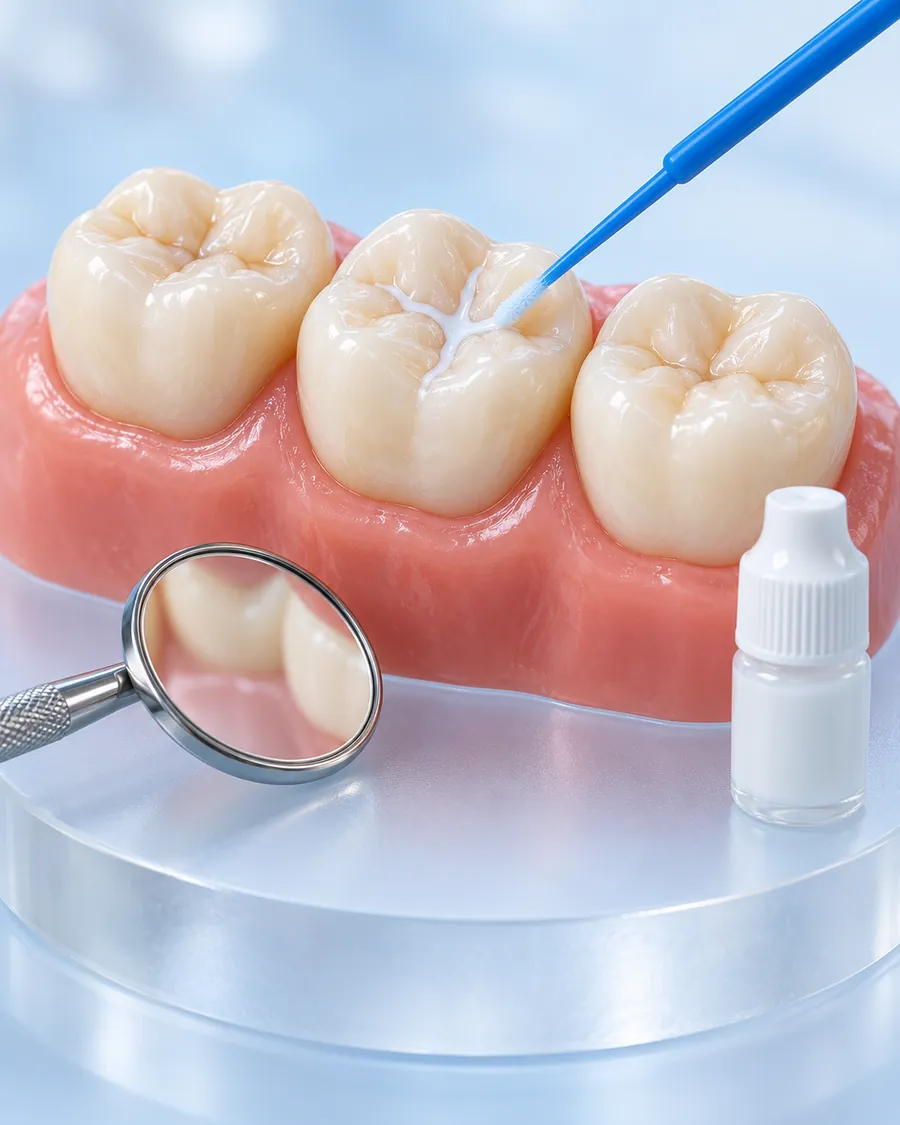
Assured Dental Care is a dental clinic in Andheri West, Mumbai, where pit and fissure sealants are used to protect the chewing surfaces of back teeth from decay. The chewing surfaces of molars have narrow, deep grooves, called pits and fissures, that a toothbrush cannot clean to the bottom, so decay often starts there. A sealant is a thin coating that is painted into the grooves and set with a light, so that food and bacteria cannot lodge in them. The procedure needs no drilling and no injection.
Your care is led by Dr. Shreya Shah, Chief Dentist, who looks at the grooves of the back teeth and at your or your child's risk of decay before suggesting a sealant. If you are looking for a dentist in Andheri West for sealants, the first step is an examination and a talk about brushing and diet, followed by a clear explanation of which teeth would benefit and which would not.
Medically reviewed by Dr. Shreya Shah, Chief Dentist. Last reviewed 9 October 2026. Registered with the Maharashtra State Dental Council (registration A 30472, 2015). Dr. Shah is also the treating dentist at this clinic.
Pit and fissure sealants at Assured Dental Care in Andheri West, Mumbai are thin coatings painted into the deep grooves of back teeth to keep food and bacteria out. Dr. Shreya Shah examines the teeth first. The procedure needs no drilling or injection, and sealants are checked at later visits because they can wear.
Examination and sealants can often be planned together, subject to availability.
A sealant fills the narrow grooves on back teeth that a toothbrush cannot reach.
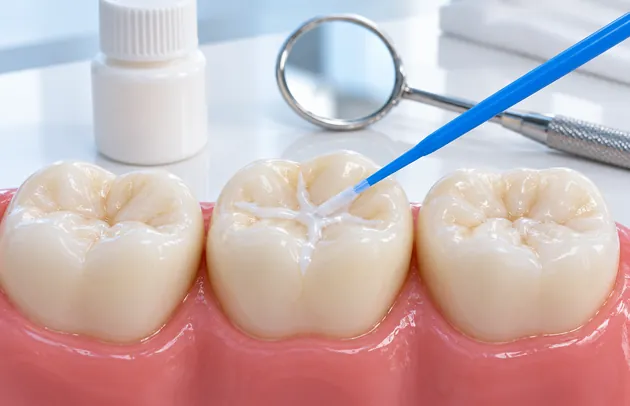
The tooth is cleaned, dried, painted and set with a light, and a child only needs to keep still.
Pits and fissures are the small holes and grooves on the chewing surface of the back teeth, the molars and sometimes the premolars. They are often too narrow for a toothbrush bristle to reach the bottom, so plaque and food collect there, and decay often starts in these grooves, sooner than on smooth surfaces.2
A sealant is a thin plastic coating, usually a resin, that is painted into the grooves and hardened with a light. It forms a smooth surface that is easier to clean and keeps bacteria out of the groove. A Cochrane review found that sealants reduced decay on the chewing surfaces of adult teeth in children and young people compared with no sealant.1
Sealants are one of several ways to prevent decay. Fluoride treatment strengthens enamel on all surfaces, and daily brushing and a low-sugar diet matter most. Our children's dentistry page explains the wider picture. A groove that has already decayed needs a filling rather than a sealant.
A sealant protects the deep grooves of back teeth from decay, and it needs no drilling.
Dr. Shreya Shah decides this only after an examination of the back teeth. These are the general patterns.
A tooth with a cavity needs a filling instead. Extra protection can come from fluoride varnish, and a child's cleaning and feeding habits are covered in the related pages below.
Sealants suit healthy back teeth with deep grooves, and an examination shows whether yours qualify.
The right choice depends on the grooves, your risk of decay and your cleaning habits. Dr. Shah explains what applies.
A thin resin coating painted into the grooves and set with a light. It is the most studied type, and it needs a dry tooth.
Quick, no drillingA tooth-coloured material that releases fluoride and can be used when a tooth cannot be kept completely dry. It is less durable and may need replacing sooner.
Quick, no drillingFluoride varnish, fluoride toothpaste, careful cleaning and less sugar protect all surfaces, and they work alongside sealants.
Ongoing| Compare | Resin sealant | Glass ionomer sealant | Fluoride varnish |
|---|---|---|---|
| Protects | Grooves of back teeth | Grooves of back teeth | All tooth surfaces |
| Needs a dry tooth | Yes | Less so | Yes, mostly |
| Releases fluoride | No | Yes | Yes |
| Durability | Longer | Shorter | A few hours of effect |
| How often | Once, then checked | Once, then checked | Every few months |
Sealants, fluoride and cleaning protect in different ways, and they are used together.
Placing a sealant takes a few minutes per tooth. Your plan may differ.1
A sealant works only when the tooth is clean and dry, so each step is done carefully.
Dr. Shah looks at the grooves of the back teeth and checks for decay, and takes an X-ray if it is needed.
You or your child are told which teeth would benefit and what will happen. A child can see and feel the tools first.
The chewing surface is cleaned with a small brush to remove plaque and food from the grooves.
Cotton rolls or a small suction hold the cheek away, and the tooth is dried. The tooth must stay dry for the sealant to stick.
A gel is brushed onto the chewing surface for a short time, and then rinsed off and dried. This roughens the enamel slightly so the sealant bonds.
The sealant is painted into the pits and fissures with a small brush.
A blue light hardens the sealant in about half a minute. The tooth can be used straight away, and the child can usually go back to normal activities.
The sealant is checked for gaps and the bite is checked. Any high spot is smoothed. Sealants are checked again at later visits.
Cost depends on your evaluation. Sealants are planned for each person, so no single figure fits everyone.
Two people can need sealants on different numbers of teeth. After the examination, Dr. Shreya Shah explains the plan, and the cost of each stage is discussed before you decide to go ahead.
Call 08806796696 or message us on WhatsApp. If you or your child have trouble breathing or swallowing, or swelling is spreading to the eye or neck, go to a hospital emergency department. For a toothache or other urgent problem, see dental emergency treatment.
Sealants need regular checks, because a sealant that has come off no longer protects the tooth.
Sealants help teeth with deep grooves, and we say plainly when a tooth does not need one.
The first visit starts with an examination. If the teeth are ready, sealants can often be placed at the same visit, subject to availability.
Brush as usual before you come. For a child, explain that it is a visit to paint the teeth and that it does not hurt. Tell us about allergies and any past reactions to dental materials.
Call 08806796696 to book.

Examination firstNo drilling neededHonest about limits
Dr. Shah explains what she finds in plain language, and you decide at your own pace. If you or your child are nervous, tell us at the start and we will go at a pace that suits you. We would rather you ask every question before treatment than leave with doubts, so please bring a list, and tell us what worries you or your child most.
The grooves are checked for decay first, so that a sealant is not put over a cavity.
Sealants need no drilling or injection, which makes them easy for children to accept.
You are told what sealants can do and what they cannot, and that brushing still matters.
If a case needs training beyond what is available, Dr. Shah says so and arranges coordinated care with a suitably trained clinician.
These are patient reviews of the clinic and Dr. Shah, copied word for word from the clinic’s Google Business Profile. They describe the experience of visiting the clinic and are not evidence of how any treatment will turn out for you.
“Lovely experience. Made my dental appointment so comfortable I forgot it was my first time .”
“Me and my family have been visiting Dr Shreya for a few years now. She makes us feel very comfortable and at ease. She is always accommodating us on urgent basis when required. Would recommend her.”
“Dr. Shreya is really friendly and welcoming, she keeps helps you stay comfortable throughout the procedures”
“Hi....it was a very good experience Doctor and staff is very professional and very attentive Thankful for easy process and excellent care”
Assured Dental Care is a dental clinic in Andheri West, Mumbai, next to Lallubhai Park in Parsi Colony. You can book a sealant check with Dr. Shreya Shah by phone or WhatsApp. The map shows the exact location of the clinic. If your problem is urgent, please call before you travel so that we can arrange the earliest visit available. Please bring any earlier reports.
Straight answers to what patients ask before they book. If your question is not here, call or message us.
Sealants are planned for each child or adult, so the cost is given only after your evaluation. It depends on the number of teeth sealed, the material, whether the teeth need a clean first, the examination and X-rays and any later check or repair. After the examination, Dr. Shreya Shah explains the plan and the cost of each stage before you decide.
A sealant is a thin, protective coating that is painted onto the chewing surface of a back tooth. The grooves on these teeth are narrow and deep, so toothbrush bristles cannot reach to the bottom. The sealant fills the grooves, so that food and bacteria cannot lodge in them.
No. The procedure needs no drilling or injection. The tooth is cleaned, dried and painted, and the sealant is set with a light. A child is only asked to keep their mouth open and still for a few minutes.
A Cochrane review found that resin-based sealants reduced decay in the chewing surfaces of adult teeth in children and young people, compared with no sealant, with studies reporting reductions that varied widely. Sealants work well on teeth that are not yet decayed, and they need to stay in place, so they are checked at later visits.
Sealants are usually placed on the back teeth, the molars and sometimes premolars, soon after they come through, which is often around the age of six for the first adult molars and around twelve for the second. Sometimes they are used on baby molars or on adult teeth later in life, if the grooves are deep and decay risk is high.
Sealants can wear down, chip or come off, so they do not last for ever. They are checked at routine visits and repaired or replaced when they have worn. We cannot say in advance how long a sealant will stay in place.
No. Sealants protect only the chewing surfaces they cover. The smooth surfaces and the places between teeth still need brushing with fluoride toothpaste and cleaning between the teeth, and sugary food and drink still need to be limited.
Sealants are for teeth with no cavity, or at most very early decay that is being watched. A tooth with a cavity that has gone into the dentin needs a filling instead. Dr. Shah checks the grooves and the X-ray before sealing.
If adult back teeth have just come through, or the grooves on your or your child's molars are deep or stained, an examination shows whether sealants will help. If another clinic has advised sealants, we are happy to give a second opinion. Call or message us during clinic hours and we will confirm a time with you.
Monday to Saturday, 10:00 AM to 7:30 PM.
Read this to see how fluoride strengthens all the tooth surfaces.
Read this for the wider picture of caring for children's teeth.
Read this if a groove has already decayed and needs repair.
See all dental treatments at Assured Dental Care, or read about our general dentist in Andheri West.
Written and reviewed by: Dr. Shreya Shah, Chief Dentist, Maharashtra State Dental Council registration A 30472. Last reviewed 9 October 2026. Dr. Shah is also the clinic’s treating dentist, and this page describes treatment that Assured Dental Care provides.
On the review date, Dr. Shah read the whole page and checked each clinical statement, timeline and warning sign against the sources listed below. The page is next reviewed within six months, and sooner if a source or the clinic’s process changes. To report an error, call or message the clinic using the details above.
This page is general information for patients. It is not a diagnosis or a substitute for an examination by a dentist. Treatment, timelines and outcomes vary from person to person.
